
Why AI Projects Fail in Established Businesses
Why AI Projects Fail in Established Businesses Last quarter, I watched a $200,000 AI initiative collapse at a mid-sized distribution company.
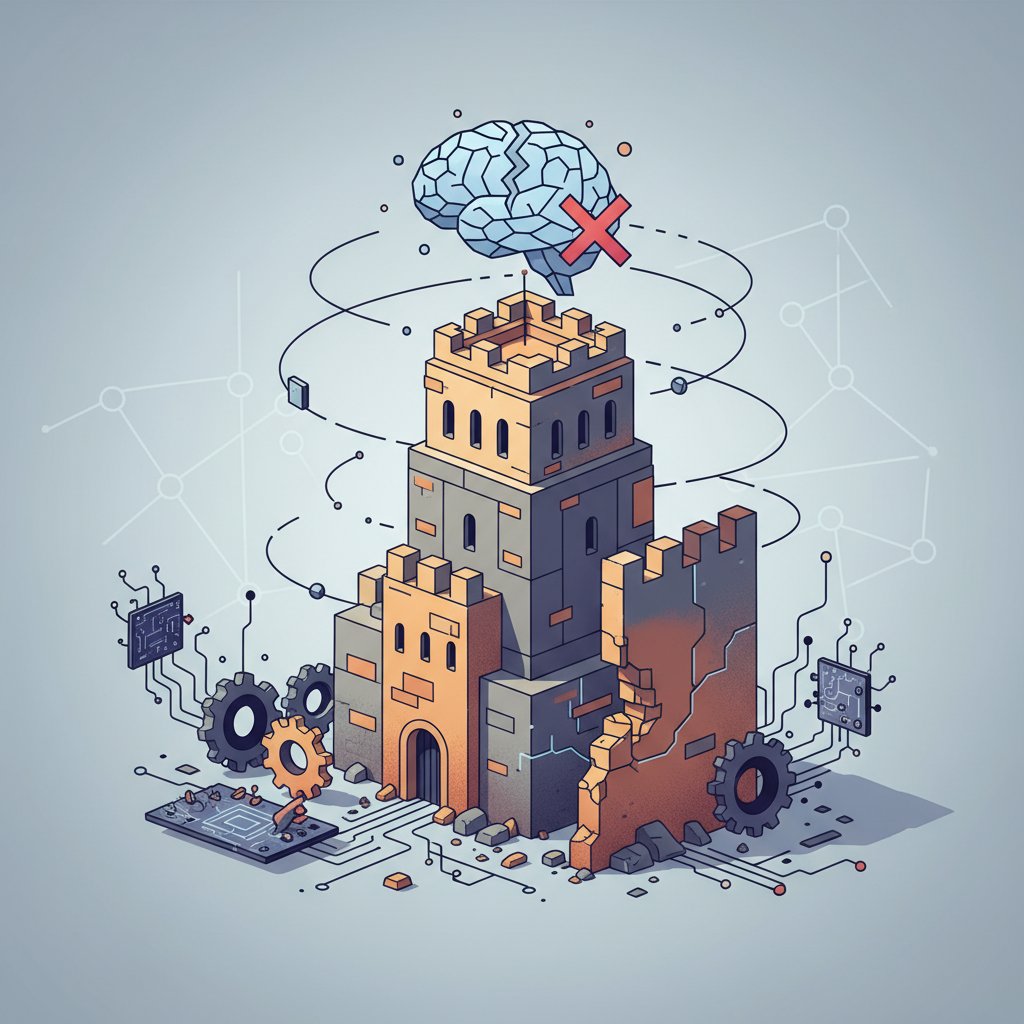
Last quarter, I watched a $200,000 AI initiative collapse at a mid-sized distribution company. They'd spent eight months integrating a chatbot with their ERP system, only to discover their actual problem wasn't customer service response time—it was inconsistent product data across three legacy databases. The AI just amplified the chaos.
This isn't an isolated incident. According to a 2026 Gartner study, 67% of AI projects in established businesses fail to reach production, and another 15% are abandoned within six months of deployment. The issue isn't the technology—it's how we're approaching implementation in businesses that already have entrenched systems, processes, and cultures.
I've been running operations for companies in the 100-300 employee range for over a decade, and I've seen the same AI implementation challenges play out repeatedly. Here's what actually goes wrong and what you need to know before your next AI initiative becomes another expensive lesson.
The Integration Nightmare Nobody Warns You About
When vendors demo their AI solutions, everything looks seamless. What they don't show you is the three-month nightmare of connecting their system to your 15-year-old ERP that still runs critical business logic nobody fully understands.
The real business AI integration problem starts when you map out your actual data flow. Most established businesses operate on a patchwork of systems: your financial data lives in QuickBooks Enterprise or NetSuite, your customer relationships are split between Salesforce and an industry-specific CRM, your inventory management runs through a distributor portal, and your service tickets live in a PSA tool that predates smartphones.
These aren't theoretical examples. A professional services firm I worked with had customer data in five different systems:
- Client contacts and project history in their PSA (Professional Services Automation) tool
- Billing and payment history in their accounting system
- Support tickets in Zendesk
- Sales pipeline data in HubSpot
- Contract documents scattered across SharePoint and individual email inboxes
They wanted to implement an AI assistant to help account managers prepare for client calls. Sounds straightforward, right? Wrong. The AI needed access to all five systems to provide useful context, but each system had different API capabilities, authentication methods, and rate limits.
The PSA tool had an API, but it was limited to 1,000 calls per day—barely enough for normal operations, let alone feeding an AI system. The accounting system required a separate integration partner with its own licensing costs. SharePoint integration meant dealing with Microsoft's complex permission structures. The whole project turned into an integration exercise that consumed 70% of the budget before the AI even processed its first query.
The Hidden Cost Problem
AI vendors love to talk about per-user pricing or flat monthly fees. What they gloss over is the token economy that powers modern AI systems. Every API call costs money, and those costs are often unpredictable until you're deep into production.
Here's a real cost breakdown from an e-commerce company implementing AI-powered product descriptions:
Initial vendor quote: $500/month for the platform. Sounds reasonable. But production reality looked like this:
- Base platform fee: $500/month
- API calls to GPT-4 for product descriptions (averaging 2,000 tokens per product, 500 new products monthly): $600/month
- Vector database for similarity search: $200/month
- Additional API calls for regenerations and updates: $300/month
- Integration middleware to connect with their product information management system: $400/month
- Increased infrastructure costs for data synchronization: $150/month
Total monthly cost: $2,150—more than four times the quoted price. And that's before accounting for the development time to build and maintain the integrations.
The vendor wasn't lying. They just weren't counting costs outside their direct control. This is standard practice across the AI industry, and it creates budget chaos for businesses that need predictable operating expenses.
Why Legacy System AI Integration Fails
Legacy systems earned that label for a reason—they're old, but they're also running critical business processes that you can't afford to break. The challenge with enterprise AI adoption in established businesses is that these legacy systems weren't designed to play nicely with modern AI architectures.
Consider a typical scenario: a field services company wants to implement AI-driven scheduling optimization. Their technician scheduling currently lives in a legacy system built in the early 2010s. It works, sort of. Dispatchers know its quirks, they've developed workarounds, and the business functions.
The AI project failure pattern goes like this:
Month 1-2: Exciting demos and planning sessions. The AI vendor shows impressive optimization capabilities using clean test data. Everyone's enthusiastic.
Month 3-4: Reality sets in during data extraction. The legacy system stores technician certifications in a free-text field. Location data is inconsistent—sometimes it's full addresses, sometimes just city names, sometimes customer nicknames like "the Miller building." Travel time calculations don't account for the fact that two technicians share a truck on Tuesdays and Thursdays.
Month 5-6: The team realizes they need to clean years of data before the AI can process it effectively. They also discover that the legacy system's database structure makes real-time data sync nearly impossible without risking system stability.
Month 7-8: Attempting to run both systems in parallel creates duplicate data entry for dispatchers, who now hate the project. The AI makes scheduling suggestions that look good on paper but ignore institutional knowledge—like the fact that certain customers will only work with specific technicians, or that the "30-minute drive" between two locations actually takes 90 minutes during rush hour.
Month 9: Project quietly shelved. The company is $150,000 poorer and more skeptical of AI than before.
The Data Quality Problem You're Ignoring
AI doesn't fix bad data—it amplifies it at scale. This is the hardest lesson for established businesses because it forces us to confront problems we've been working around for years.
A distribution company I consulted with wanted to implement AI-powered demand forecasting. Their data problems included:
- Product categories inconsistently applied across 40,000 SKUs
- Customer industry classifications that were "best guesses" from sales reps
- Historical sales data that didn't distinguish between stock-outs (customer wanted to buy but couldn't) and genuine lack of demand
- Pricing that varied by customer relationship, payment terms, and unrecorded phone negotiations
- Seasonal patterns masked by one-off bulk orders that skewed averages
Feed this data into an AI forecasting model, and you get precisely calculated nonsense. The AI will confidently predict demand based on patterns that don't actually exist or miss real patterns buried in the noise.
The solution isn't better AI—it's better data governance. But data governance is boring, expensive, and politically difficult because it requires admitting that your current processes are creating problems. Most companies would rather buy an AI solution than fix their data foundation.
The Culture and Change Management Gap
Technical challenges are solvable. Cultural resistance kills AI projects more effectively than any integration problem.
Your experienced employees have institutional knowledge that isn't captured in any system. They know which customers are price-sensitive, which vendors are reliable despite occasional shipping delays, and which products have compatibility issues that aren't documented anywhere. They've built their expertise over years, and now you're asking them to trust an AI system that doesn't understand context.
I watched this play out at a professional services firm implementing AI-assisted project scoping. The AI analyzed historical projects to estimate timelines and resource requirements. On paper, it was more accurate than human estimates. In practice, senior project managers ignored it because:
- The AI didn't account for client-specific quirks (this client always changes requirements mid-project)
- It didn't understand team dynamics (these two developers work poorly together)
- It missed seasonal patterns (our best people take vacation in July, always pad summer projects)
- Historical data included projects from when the team was less experienced, skewing estimates
The project managers weren't being obstinate—they were being realistic. The AI had data, but they had knowledge. The implementation failed because it positioned AI as a replacement rather than a tool that augmented their expertise.
Vendor Lock-In and the Loss of Control
Modern AI platforms want to own your entire workflow. Use their data storage, their processing, their interfaces, their pricing model. For established businesses that have fought hard for operational independence, this is a massive risk.
Consider what happens when you build critical business processes on top of an AI platform:
- Your data gets formatted to their specifications, making migration difficult
- Your team learns their interfaces and workflows, creating switching costs
- Your customers receive outputs formatted their way, creating expectation lock-in
- Your business logic gets encoded in their system, often in ways you can't easily export
Then they raise prices. Or change their terms of service. Or get acquired by a competitor. Or pivot their product strategy. You're stuck.
A better approach is building with portability in mind from day one. Use open APIs, maintain local copies of critical data, document your business logic separately from implementation, and architect solutions that can swap AI providers without rebuilding everything. This requires more upfront thinking but prevents catastrophic lock-in down the road.
What Actually Works: A Practical Framework
After watching numerous AI implementation challenges play out, here's what I've seen work in established businesses:
Start With Process Problems, Not AI Solutions
Identify a specific, measurable problem that's costing you money or opportunity. "Customer service is slow" isn't specific enough. "We spend 6 hours daily answering the same 20 questions about order status" is specific.
Document your current process completely. Map every step, every system, every data source, every decision point. This reveals whether AI is actually the right solution or if you have a process problem that better workflow design could solve.
Pick One Clean Data Domain
Don't try to integrate everything at once. Find a domain where your data is relatively clean and complete. Maybe your inventory data is solid even if your customer data is a mess. Start there.
A distribution client had terrible customer data but excellent inventory and order history. We implemented AI-driven reorder suggestions based purely on purchase patterns, which didn't require customer demographic information. It worked because we picked a battle we could win.
Build Integration Infrastructure First
Before adding AI, get your systems talking to each other properly. Implement a proper API layer or integration platform that can move data between systems reliably. This has value independent of AI and makes future implementations dramatically easier.
One company spent three months building a data synchronization layer between their ERP, CRM, and warehouse management system. It cost $40,000 and delivered zero immediate business value. But it enabled four different AI projects over the next year, each of which took weeks instead of months because the integration infrastructure already existed.
Pilot With Augmentation, Not Replacement
Position AI as helping humans make better decisions, not replacing human judgment. Give people AI suggestions they can accept, modify, or reject. Track both the AI recommendations and the human decisions to identify patterns where the AI is helpful versus where human knowledge is superior.
This approach builds trust gradually and creates a feedback loop that improves the AI over time. It also gives you data on whether the AI is actually adding value or just creating extra work.
Maintain Operational Control
Insist on understanding how the AI makes decisions, even at a high level. Black box solutions are fine for non-critical applications but dangerous for core business processes. You need to be able to explain to customers, auditors, or regulators why the AI made a specific decision.
Keep human override capabilities for everything. The AI should make 95% of decisions automatically, but humans need to be able to step in for the 5% of edge cases where context matters more than pattern matching.
When AI Isn't the Answer
Sometimes the honest answer is that AI won't solve your problem, at least not yet. Here are situations where I've recommended against AI implementation:
- Your underlying data is too inconsistent to produce reliable results, and you're not willing to invest in data cleanup first
- The problem occurs too infrequently to generate enough training data or justify the implementation cost
- Human judgment requires contextual knowledge that isn't captured in any system and can't be easily codified
- Your team is already overwhelmed and doesn't have capacity to learn new systems or provide feedback for AI training
- The cost of AI errors exceeds the cost of human errors, and you can't effectively validate AI outputs
Being honest about these limitations builds more credibility than promising AI will solve everything. Sometimes better training, clearer processes, or additional headcount is the right answer.
Moving Forward
AI implementation in established businesses isn't a technology problem—it's an integration, data quality, cost management, and change management problem that happens to involve technology. Success requires acknowledging these challenges upfront and planning for them systematically.
The businesses that succeed with AI in 2026 aren't the ones with the biggest budgets or the flashiest vendors. They're the ones that start small, focus on specific problems, build solid integration infrastructure, maintain control over their operations, and treat AI as one tool among many rather than a magical solution.
If you're considering an AI project, spend more time mapping your current systems and data flows than evaluating AI vendors. Understand your integration points, your data quality issues, and your team's capacity for change. Build relationships with vendors who are transparent about limitations and costs, not those promising revolutionary transformation.
Most importantly, remember that you're running a business, not conducting an AI experiment. Every technology investment should deliver measurable value within a reasonable timeframe with acceptable risk. If an AI vendor can't explain clearly how their solution will do that within your existing operational constraints, keep looking.
The companies winning with AI aren't the early adopters throwing money at every new platform. They're the thoughtful operators who implement deliberately, maintain control, and focus relentlessly on solving real business problems rather than chasing technological trends.